Blog

  • The SEO Report I Should Have Written Differently

    Not long ago, a client signed up for our SEO package. The goal was straightforward: get their services found on search engines.

    They were highly focused on measurable outcomes. Before we even started, they asked for a forecast SEO report — a projection of what results to expect after the SEO work was done. How much would impressions grow? What about clicks? How many keywords would rank high? This is standard practice in traditional SEO: let the numbers do the talking, and watch the rankings climb.

    Then Google changed the rules.

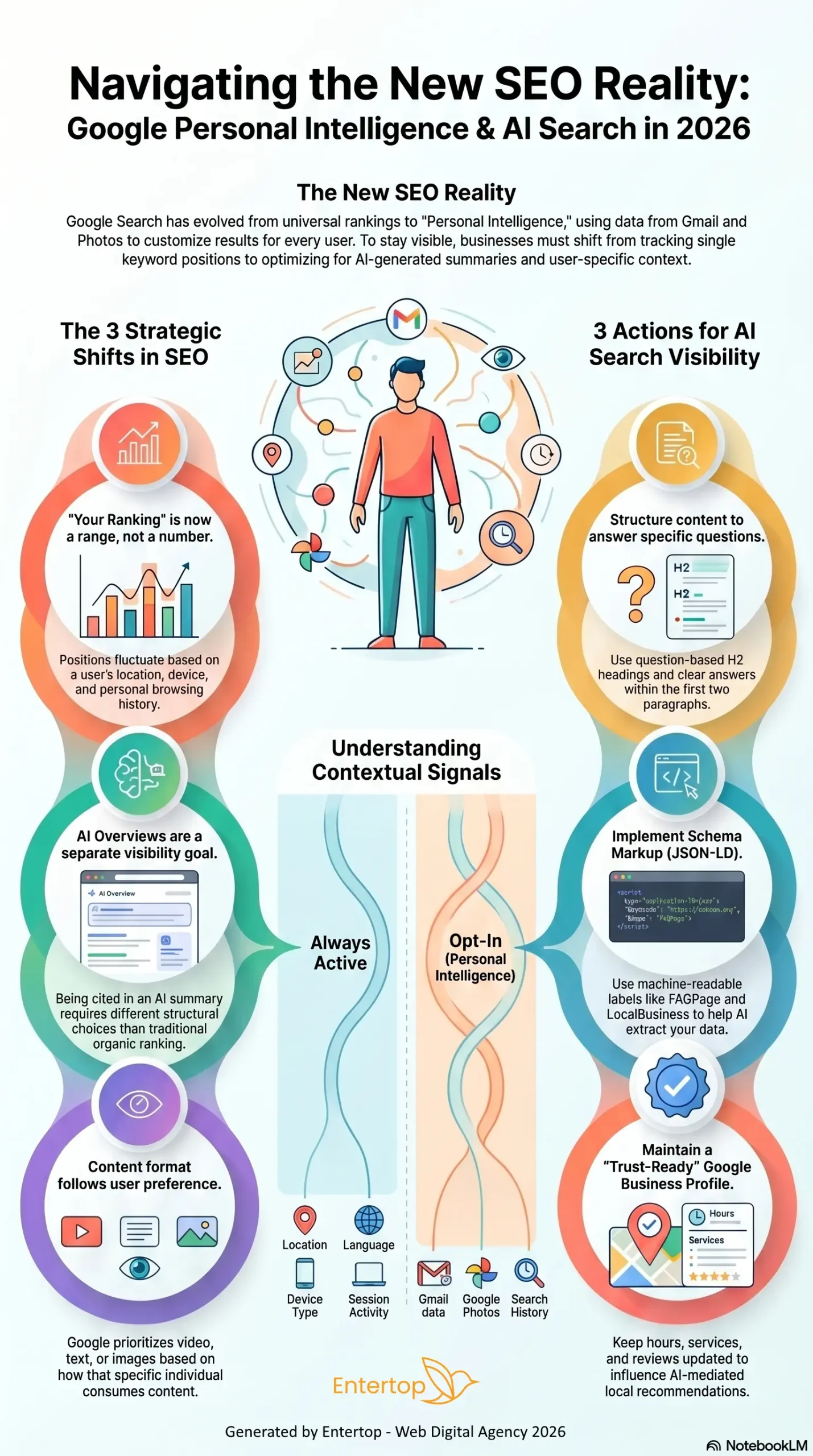
    At I/O 2026 in May, Google made it official — something that had been quietly brewing for over a year: search is no longer primarily a link distribution system. It is becoming an AI agent platform.

    This wasn’t Google adding an AI summary box to the top of search results. This was Google rebuilding Search itself — from a results page into an integrated interface for AI-powered answers, AI agents, and personalised task execution.

    Even the search box has been redesigned. It no longer just accepts keywords. It now supports text, images, files, videos, and even Chrome tabs — a fully multimodal AI-powered input. Users no longer need to search step by step and piece together information on their own. The AI Search Agent proactively synthesises content from blogs, news, social media, and real-time financial and shopping data — and delivers it directly to you.

    Think of it this way: you used to walk to the newsstand, flip through a stack of magazines, and hunt for the article you needed. Now the paperboy drops the exact edition you want at your front door every morning.

    Users have shifted from actively searching to passively receiving.

    So what does this mean for the majority of businesses that rely on SEO to generate enquiries?

    Your website content is no longer just the medium through which users find you. It is now the raw material that an AI agent evaluates when deciding whether to recommend you.

    Does SEO still matter?

    Yes. But the goal has changed.

    You are no longer optimising purely for Google’s algorithm. You are optimising for the judgement of an AI Agent — how it reads, interprets, and decides whether your content is worth surfacing.

    This is why SEO combined with AI Search Optimization is not an optional upgrade for your online marketing strategy. It is the next mandatory foundation.

    As for that client who asked for a forecast SEO report — I should have handed it to them with a note on the first page:

    “The projections in this report reflect performance under the old rules. The game has changed. Let’s redefine what success looks like — together.”

  • What you see on your website may not be what Google sees.


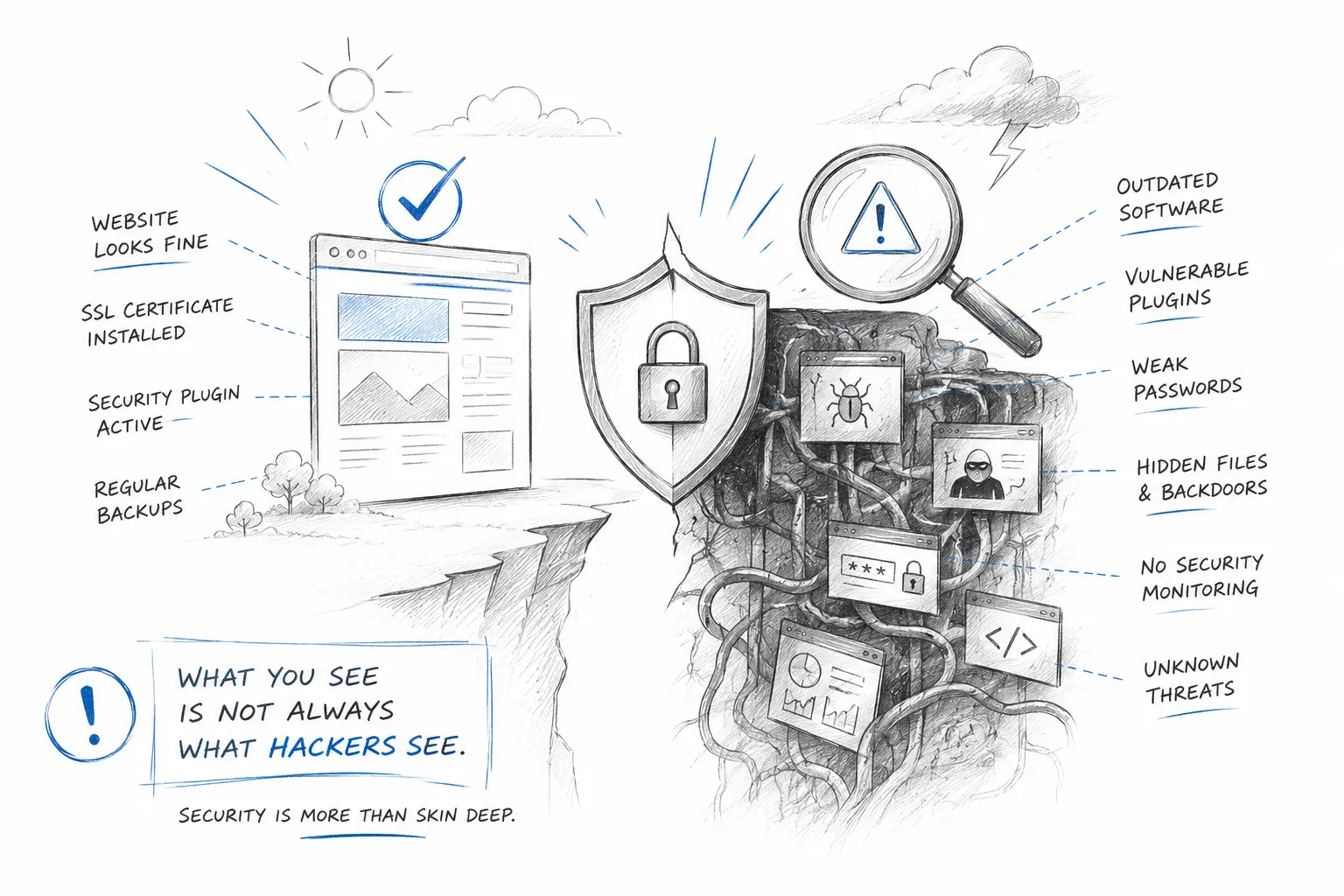
    Many companies check their website with the human eye.

    The homepage loads.
    The design looks fine.
    The content appears normal.
    Everything seems to be working.

    But from the perspective of a search engine bot, the website may be telling a very different story.

    I have seen websites that look perfectly normal to visitors, but behind the surface, they were already affected by malicious code, spam content, suspicious redirects, or cloaking issues.

    To a human visitor, it still looks like a corporate website.

    To Google, it may look like a gambling site, a spam page, or a compromised domain.

    This is one reason why some companies invest in SEO for months, but still struggle to rank.

    The issue may not always be the keyword strategy.
    It may not always be the content.
    It may not even be the SEO agency.

    Sometimes, the website itself has been polluted.

    A proper website review should not only ask:
    “Does the website look okay?”
    It should also ask:
    What do users see?
    What does Google see?
    What is happening inside the backend and code?
    Are there hidden spam pages or suspicious indexed URLs?
    Is the website still trustworthy from a technical and search engine perspective?
    A corporate website is not only a design asset.
    It is part of your company’s digital trust.
    And digital trust is not built only by looking professional on the surface.
    It is built by being clean, secure, credible, and consistent behind the surface too.
    A website that looks normal is not always a website that is healthy.
    Before investing more into SEO, sometimes the smarter question is:
    Is Google seeing the same website that your customers are seeing?

  • Thinking of hiring a web designer for your business

    Thinking of hiring a web designer for your business

    Most businesses choose a web designer based on design style.

    That is the wrong criterion.

    A visually impressive website that loads slowly, breaks on mobile, and cannot be found on Google has failed its core purpose regardless of how it looks on a desktop in a well-lit showroom.

    The skills that actually matter for a business website in Malaysia go well beyond aesthetics:

    • Responsive, mobile-first design (over 60% of local traffic is mobile)
    • SEO-ready page structure from the first build decision
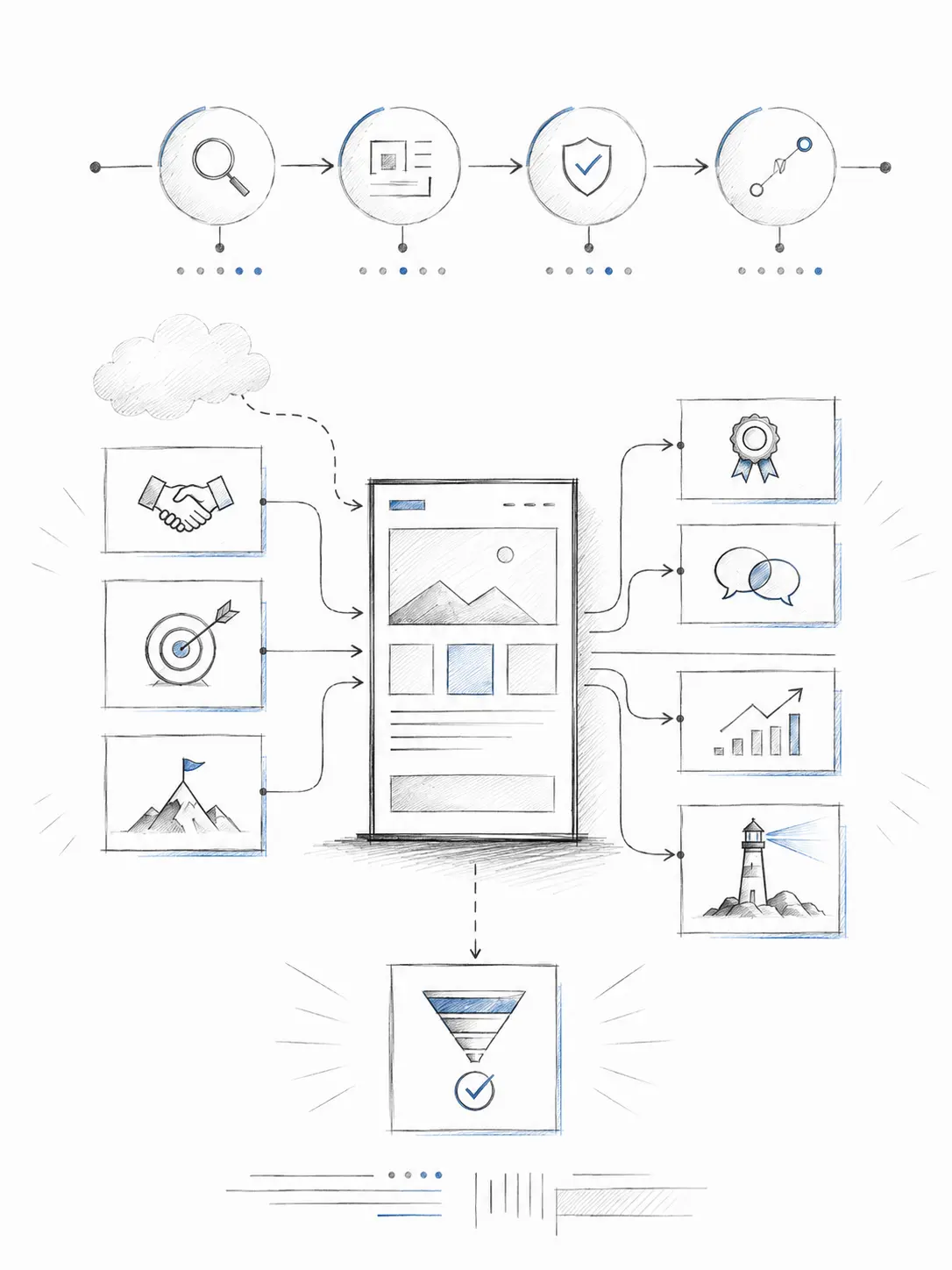
    • UX planning that guides visitors toward an enquiry not just a scroll
    • Basic HTML and CSS knowledge so design decisions don’t break in production
    • CMS experience so you can manage your own content after launch
    • Business understanding the ability to ask the right questions before designing

    The last point is the one most often missing.

    A designer who waits to be told exactly what to do will produce exactly what they are told not what the business actually needs.

    Before hiring, ask one question: “How do you approach a project before you open a design tool?”

    The answer tells you more than any portfolio.