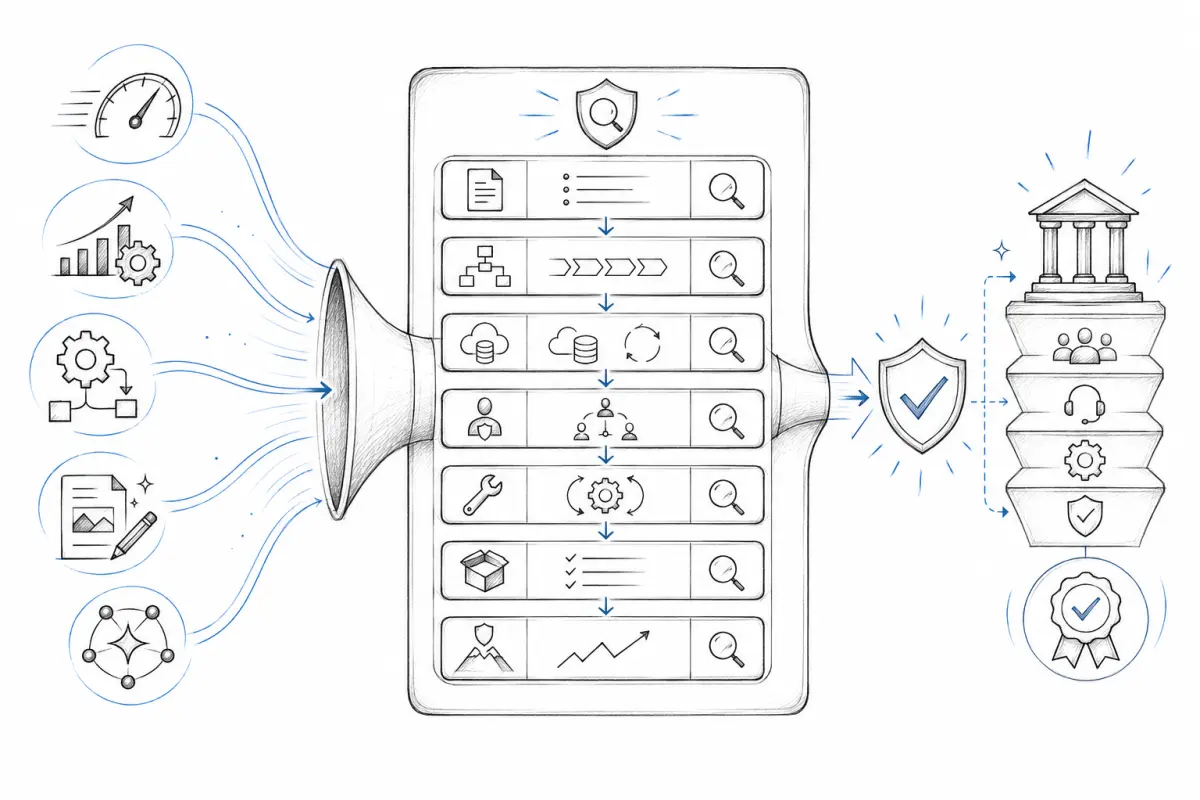
Recently, many YouTubers, bloggers, and professionals who study AI have been talking about one major trend: AI can greatly amplify an individual’s ability.
With the right AI tools, one person can now handle work that previously required multiple roles, departments, or specialists. Copywriting, image generation, research, automation, content production, data analysis — many tasks can now be supported or accelerated by AI.
Because of this, we are starting to hear more about the rise of the “one-person company” or “One-Person Business” The idea is that one person, powered by AI, can manage many functions that used to require a traditional team.
It sounds attractive. But from a business perspective, we should not only look at efficiency. We also need to look at the risks behind it.
AI Can Definitely Amplify Individual Capability
I do not deny the value of AI.
AI can help one person work faster, improve productivity, close certain knowledge gaps, speed up content creation, organize information, and execute tasks more efficiently. For freelancers, consultants, small teams, and entrepreneurs, AI is a very powerful tool.
In the past, a freelancer might only be able to handle a limited amount of work. Today, with AI, that same person can write faster, produce more, respond quicker, and even appear to operate like a small team.
In that sense, AI has turned many freelancers into “super freelancers.”
But increased capability does not mean business risk disappears.
The Biggest Issue With a One-Person Company Is Not Ability. It Is Dependency.
The real concern with an AI-powered one-person company is not whether the person knows how to use AI.
The real concern is whether the entire service delivery depends too heavily on one individual.
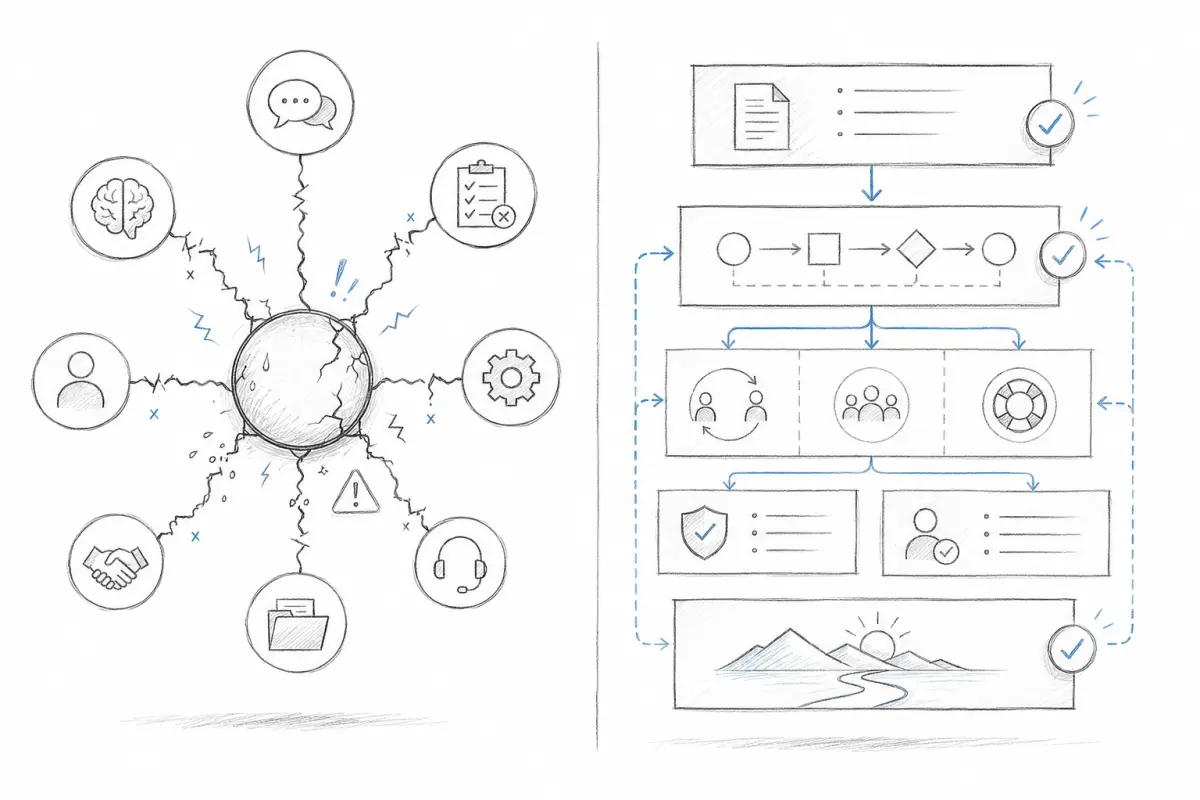
If all communication, decision-making, execution, client relationships, technical knowledge, and project memory are concentrated in one person, then that person becomes the central point of the entire service.
Once this central person is unable to operate — due to illness, burnout, personal issues, being overloaded, losing focus, or even more serious unexpected situations — the client will face a very real problem:
Who will take over?
Is there another person who understands the project?
Is there proper documentation?
Is there a process?
Is there backup support?
Is there a company structure that can continue supporting the client?
This is the real risk businesses need to consider when choosing a vendor.
For Business Clients, Service Stability Matters More Than “One Very Capable Person”
Many businesses are easily impressed when choosing a website developer, system developer, SEO consultant, AI automation provider, or digital solution vendor.
This person understands AI. This person speaks well. This person replies quickly. This person seems able to do everything.
But what a business truly needs is not only “one very capable person.”
A business needs a service provider that is stable, sustainable, accountable, traceable, and able to support the project over time.
This is especially important when the project involves websites, business systems, email, servers, customer data, SEO, online advertising, payment processes, or internal operational workflows.
A vendor is not just someone who completes a task once. Long-term maintenance, troubleshooting, security updates, staff handover, system continuity, and ongoing support are all important.
If the vendor is only one person, with no team, no process, no documentation, and no backup support, the client is taking on a certain level of business risk.
An AI One-Person Company Is Not Always a Bad Choice. It Depends on the Type of Project.
Of course, this does not mean one-person companies or freelancers are always a bad choice.
Some projects are very suitable for freelancers or small teams. For example, short-term content creation, design concepts, simple landing pages, copy editing, one-off consulting advice, or lightweight automation testing.
These projects are usually lower risk, shorter in duration, and less dependent on long-term continuity.
However, if the project is closely related to long-term business operations, such as a corporate website, customer portal, member system, ERP integration, server maintenance, SEO strategy, business email, cybersecurity, or internal workflow system, then businesses should not only ask whether the vendor knows how to use AI.
They should also ask:
- Is the project scope clearly defined?
- Is there technical documentation or handover material?
- Is there a long-term maintenance arrangement?
- Is there a team or backup person supporting the project?
- If the main person is unavailable, who can continue the work?
- Does the service depend on personal memory, or is there a structured process?
- If something goes wrong, who is responsible?
These questions are often more important than asking, “What AI tools do you use?”
Do Not Be Misled by the Packaging of the “AI One-Person Company”
The concept of a “one-person company” can be useful as a metaphor. It means that one person, with the help of AI and digital tools, can now achieve what previously required a small team.
The problem is that many platforms and content creators keep emphasizing the idea that “one person can do everything.” This may create the wrong impression that teams, processes, experience, accountability, and long-term support are no longer important.
That is a dangerous misunderstanding.
AI can improve productivity, but AI does not automatically carry business responsibility. AI can help one person do more, but AI does not automatically create a service system. AI can make an individual more capable, but AI cannot replace a business’s need for stability, trust, and risk management.
Conclusion: When Choosing a Vendor, Do Not Only Ask Whether They Use AI
In the future, there will be more AI-powered freelancers, small teams, and one-person companies.
This is not a bad thing.
The real issue is that businesses should not be attracted only by messages such as “AI is powerful,” “delivery is faster,” or “one person can handle many things.”
The more important questions are:
Is this vendor reliable? Can the project be handed over if needed? Is the service sustainable? Will someone be responsible if something goes wrong? Is there long-term support? Is this just an individual who knows how to use AI, or is this a solution partner with a proper service mechanism?
AI will change how work is done.
But the core standard for choosing a business vendor remains the same:
Trust, accountability, stability, experience, process, and long-term support.
These are the things businesses should truly pay attention to.